|
The application boundaries of low altitude economy are rapidly expanding from large logistics drones to manned aircraft. On the afternoon of January 16, 2026, an industry conference on the sky attracted a lot of attention in Suanli Town, Linping District, Hangzhou. The first and second member meetings of the Hangzhou Low altitude Economy Industry Federation are held here, where government departments, enterprise representatives, and research institutions gather to discuss the current progress and future plans of the low altitude economy.
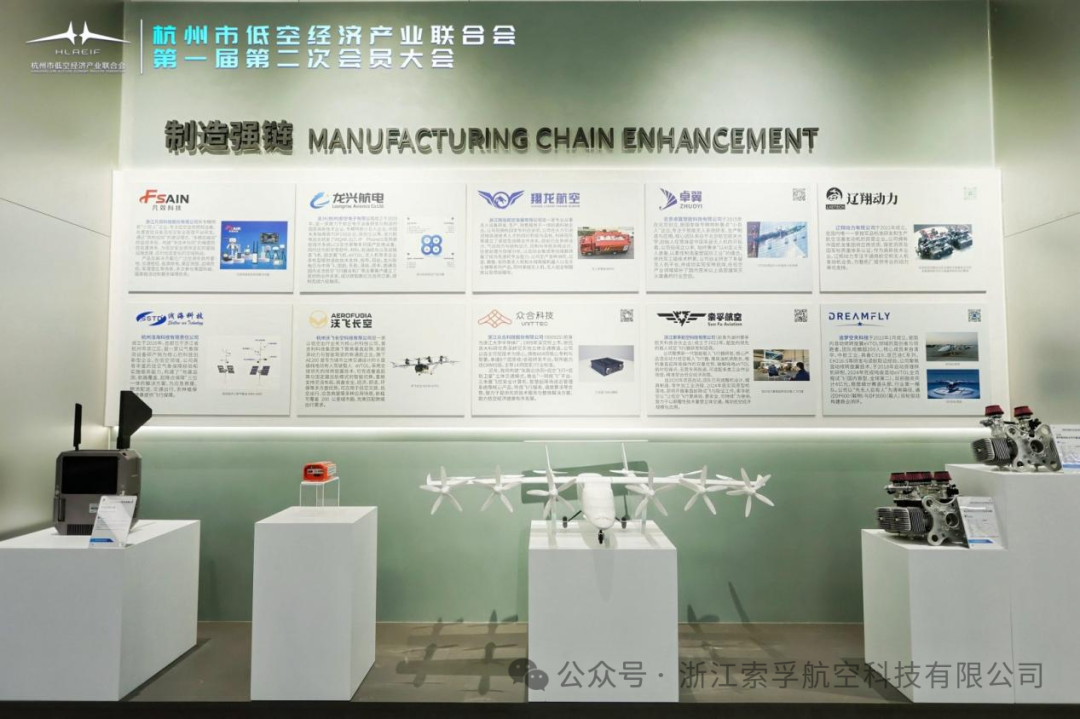
It is worth noting that this conference is not only an internal exchange within the industry, but also reveals Hangzhou's substantive layout in the field of low altitude economy. At the Hangzhou Low altitude Economy Exhibition Hall, which was put into use at the same time, attendees witnessed the specific evolution from concept to product.
.png)
---
01 Exhibition Hall Direct Strike: Enterprise Products Get Key Attention
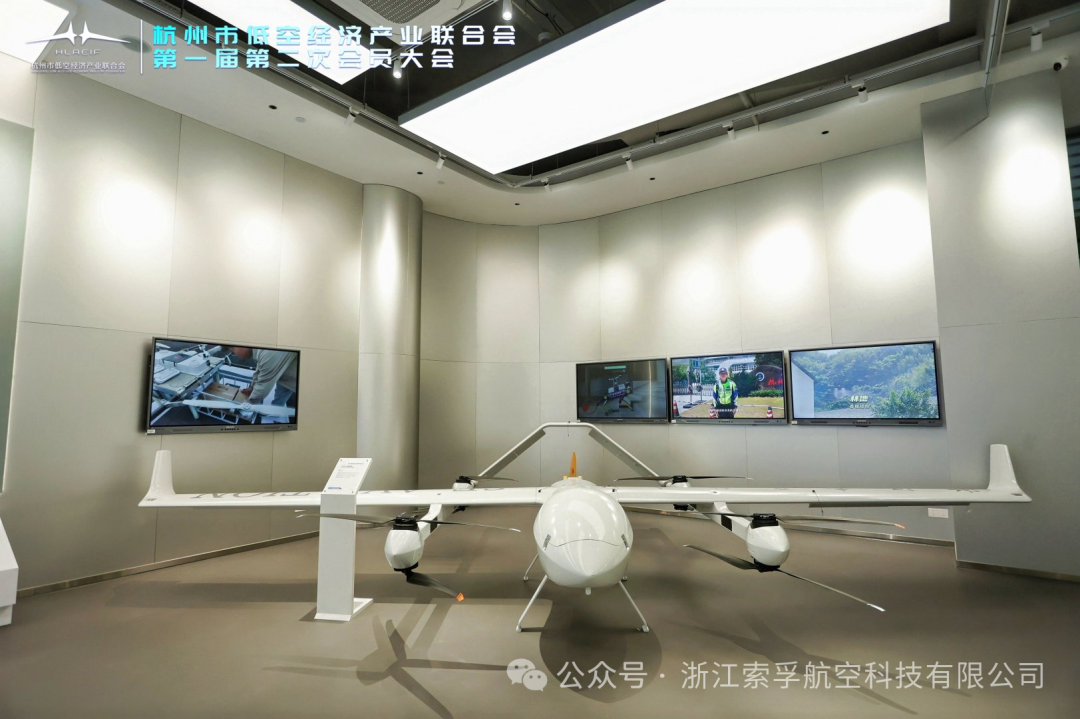
A professional explanation is taking place in the Sofu Aviation exhibition area of the Hangzhou Low altitude Economy Exhibition Hall. Suofu Airlines Chairman Yi Jiachi gave a detailed introduction to the company's development history and core products to Ding Digang, Vice Mayor of Hangzhou City, Niu Jian, President of the Low altitude Economic Industry Federation, Shen Guofeng, Deputy District Mayor of Linping District, and Zhou Xuyin, Secretary of the Linping District Committee, among other leaders. The SFW150V large unmanned aerial vehicle displayed on site attracted the attention of leaders and guests with its considerable payload and range capability. This model is applied in industrial level scenarios such as logistics transportation, emergency rescue, and agricultural and forestry operations, reflecting the mature strength of ZF in the high-end manufacturing of aircraft. What is more noteworthy is that Yijiachi has revealed that its independently developed SF20V vertical takeoff and landing manned aircraft is expected to make its maiden flight in early 2026. This information indicates that the low altitude economy is making solid progress from cargo transportation to more disruptive urban air passenger transport.
.png)
02 Policy and Industry Coordination, How Hangzhou Layout Low altitude Economy
Ding Digang, Deputy Mayor of Hangzhou, stated at the meeting that the low altitude economy is an important area for developing new quality productive forces, and Hangzhou will systematically promote the agglomeration of related industries and ecological construction. This conference sends a clear signal that government guidance and market drive are forming a synergy. At the meeting, the Hangzhou Low altitude Economy Exhibition Hall and the Federation's "Member's Home" were officially unveiled, aiming to build a physical platform for industry docking and resource sharing. At the same time, the "Hangzhou Low altitude Industry Ecological Cooperation Community" has signed a contract, and multiple enterprises will cooperate in technology, standards, scenarios, and other aspects. These measures indicate that Hangzhou is promoting the systematic development of low altitude economy from single point innovation through a dual architecture of "platform+ecology".
.png)
.png)
.png)
03 From Technology to Scenarios: Clarifying the Path of Low altitude Economic Landing
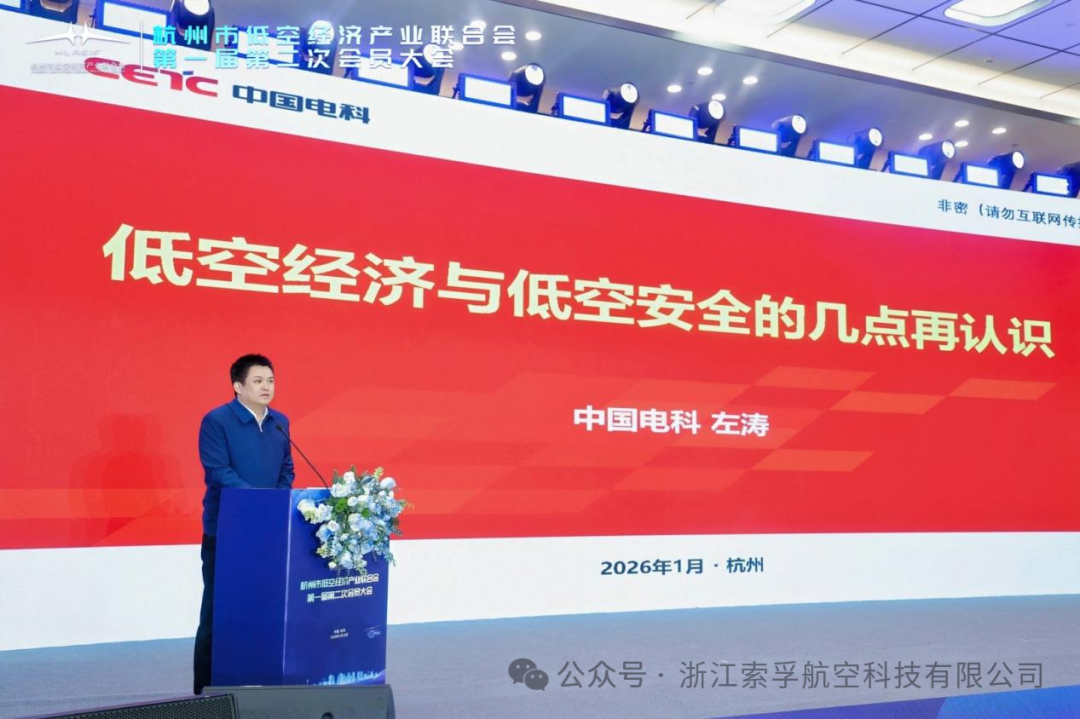
Zuo Tao, Chief Expert of China Electronics Technology Group Corporation, emphasized in the theme sharing that safety is a prerequisite for the development of low altitude economy and needs to be promoted comprehensively at the technical, management, and regulatory levels. This viewpoint echoes the common challenge of the industry moving from experimentation to large-scale operation. At the application level, the conference released the 2025 Low altitude Economy Industry Development Collaborative Project and Technology Innovation Collaborative Project, covering multiple aspects such as infrastructure, operational services, and technology research and development. The project list shows that Hangzhou is advancing synchronously from two dimensions: "scenario driven" and "technology driven". It has both logistics, inspection and other recent landing scenarios, as well as medium - and long-term directions such as manned flights.
04 Manned spacecraft becomes the focus, enterprises compete for new tracks
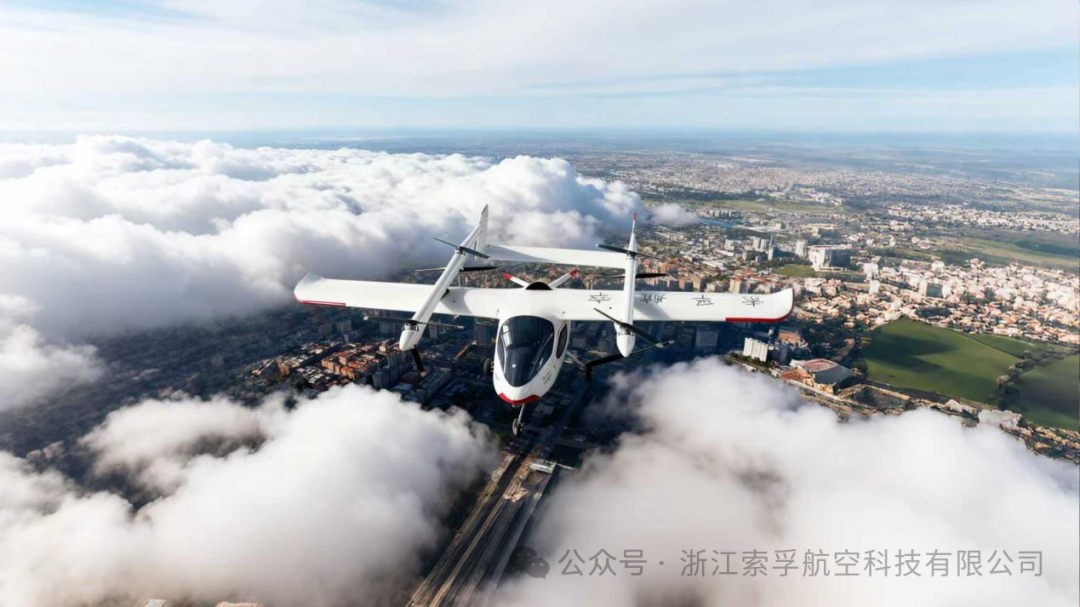
The SF20V manned aircraft, which is about to make its maiden flight, is one of the highly anticipated products at this conference. This aircraft model adopts a vertical takeoff and landing design, suitable for urban air traffic, business commuting, emergency rescue and other scenarios, representing the enterprise's move towards the field of "manned" low altitude operations. In fact, this trend is not an isolated case. Chen Yang, Vice President of Operations at Wofei Changkong Technology, pointed out in his sharing that the operational capability of eVTOL (electric vertical takeoff and landing aircraft) will become the core driving force for low altitude economy. Li Wenshuo from Beihang Hangzhou Innovation Research Institute analyzed the combination of safe flight of drones and future applications from a technical perspective. The low altitude economy is extending from "unmanned aerial vehicles+" to "manned aerial vehicles+", and the logic of enterprise layout is also expanding from equipment manufacturing to high-end links in the value chain such as operation services and data platforms.
05 Logistics scene first, continuous exploration of business models
Among numerous application scenarios, low altitude logistics is currently one of the most commercially promising fields. Li Ning, Vice President of Beijing Shansong Technology Co., Ltd., shared his thoughts on low altitude logistics from scenario verification to commercial closed-loop based on real-time logistics practice. Li Ning believes that low altitude logistics is not a simple replacement for ground transportation, but a solution to improve efficiency and overcome spatial constraints in specific scenarios. From emergency drug delivery to high-end logistics, from mountainous distribution to cross lake transportation, differentiated scenarios will give rise to diverse business models. At present, Hangzhou has launched pilot drone logistics in some areas, and is expected to form a replicable and scalable operational system in the future.
06 Opportunities and Challenges in Hangzhou
As a strong city in the digital economy, Hangzhou has an industrial foundation in areas such as artificial intelligence, the Internet of Things, and cloud computing, which can form technological synergy with the low altitude economy. Platforms such as Linping District Computing Power Town also provide data support and testing environment for low altitude applications. However, the development of low altitude economy still faces multiple challenges such as airspace management, safety assessment, public acceptance, and cost control. Although not all answers were given at this conference, it demonstrated Hangzhou's pragmatic attitude and systematic thinking in promoting industrial development through product displays, viewpoint sharing, and industry collaboration. From payload to manned, from technology to scenarios, the imaginative space of low altitude economy is opening up. For Hangzhou, this is both an opportunity for industrial upgrading and a comprehensive test of urban governance, technological integration, and ecological construction. With more enterprises joining, more scenarios landing, and more policy optimizations, the low altitude economy is expected to move from "demonstration operation" to "scale operation" and truly integrate into the urban development context.
For more details, please visit the official website of Sofu Airlines; www.csfai.com。
|
